

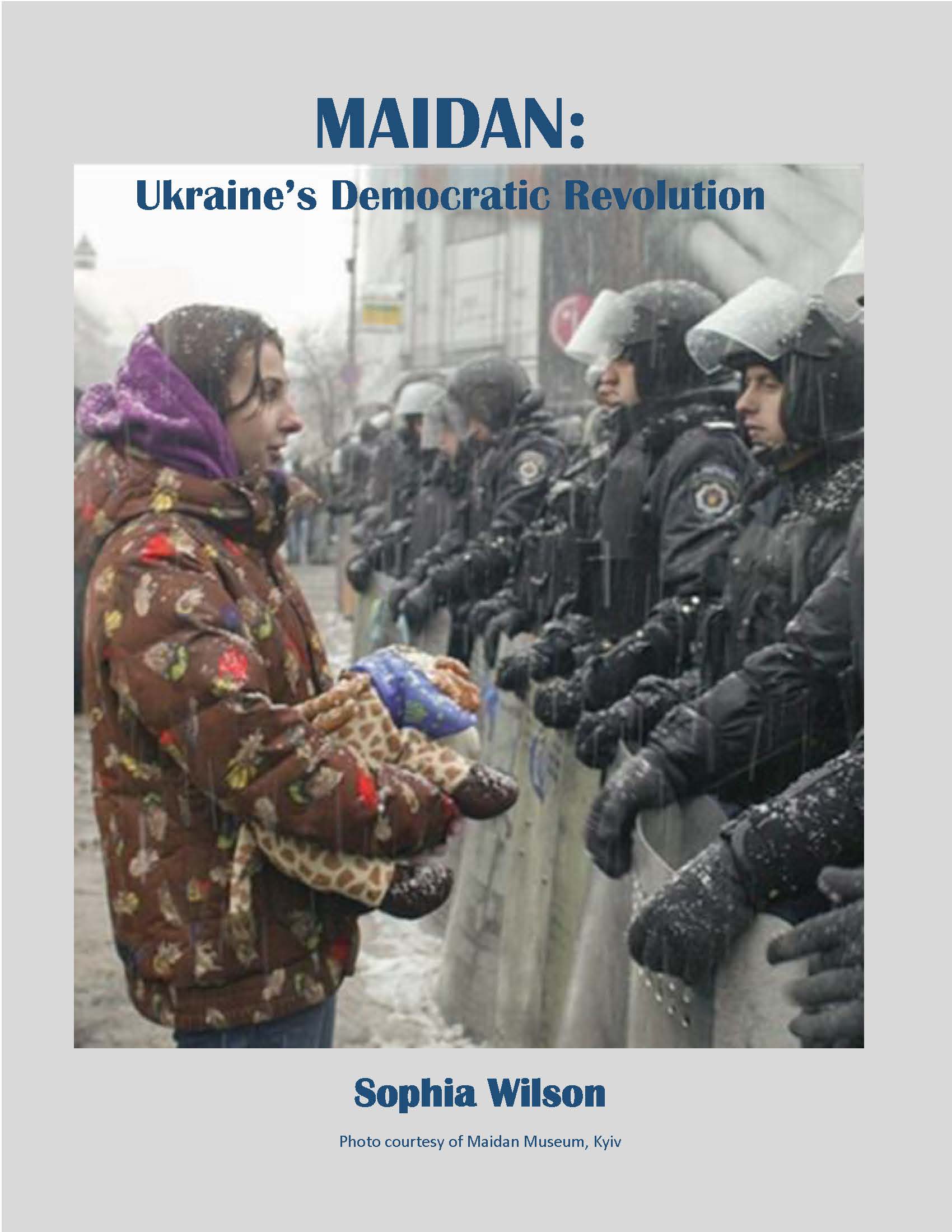
The Ukrainian Maidan Revolution was far more than just protests – it was a complex system of social networks working together to preserve democracy, a true grassroots movement. Sophia Wilson will present her forthcoming book, a years-long study of the Maidan revolution. After the police beat and detained peaceful protesters in November of 2013, hundreds of thousands travelled to the capital to show protest, and many decided to stay. They cooked food and organized logistical operations to connect revolutionaries with those offering free rent, pro bono legal services or medical aid. Activists organized marches, vehicle caravans, printed illegal brochures and launched social media campaigns against the state. They argued in courts against due process violations, fought the police on the streets and debated the meaning of democracy with their countrymen.
The Maidan Revolution fundamentally changed Ukraine. It prevented the consolidation of an authoritarian regime. As the Maidaners took part in resisting the state, they learned more about themselves. Revolution became the process that changed society: Soviet-era social beliefs were transformed, giving way to newly discovered concepts of civic duty and inter-personal social trust. As a multitude of social networks were built to resist police violence and prevent detention, Ukrainians learned to trust each other more. As activists debated means of resistance in the bitter cold of the protest square, they solidified a new understanding of democracy, one necessitating constant social oversight of state functions. As they fought against the unlawful detention of protesters in courts, they asserted new boundaries of state-society relations, engaging the concept of inalienable rights. The extensive grassroots social movement, which brought Ukrainians from various social backgrounds and identities, defined the new post-Maidan Ukraine.